
Wildfires have become an increasing concern for communities across the country, especially in areas prone to drought, high temperatures, and strong winds. While large-scale mitigation efforts often make headlines, one of the most effective and practical ways to reduce fire risk starts much closer to home: removing dead brush.
Dead brush may seem harmless at first glance, but it plays a significant role in how fires start, spread, and intensify. Understanding why brush removal matters can help property owners, businesses, and communities take proactive steps to reduce fire concerns.
Why dead brush is a fire hazard
Dead brush consists of dried grasses, fallen branches, leaves, shrubs, and other vegetation that no longer retain moisture. Because this material is dry and often lightweight, it ignites easily. Even a small spark from equipment, a cigarette, lightning, or a nearby fire can set dead brush ablaze.
Once ignited, dead brush acts as fuel. It allows flames to travel quickly along the ground and can carry fire toward larger vegetation, structures, and wooded areas. In many cases, ground-level brush fires climb into trees, creating more intense and dangerous crown fires that spread rapidly and are harder to control.
In short, dead brush provides the kindling that helps a small fire become a major event.
How brush removal reduces fire risk
Removing dead brush interrupts the fire triangle by reducing available fuel. Without sufficient fuel, fires are less likely to start, and if they do, they are less likely to spread quickly or burn intensely.
Here are several key benefits of brush removal:
Slows fire spread
By clearing out dry vegetation, you create natural breaks in the fuel path. These breaks slow the movement of flames and give firefighters a better chance to contain the fire before it reaches buildings or larger forested areas.
Protects structures
Maintaining a defensible space around homes and buildings is one of the most effective wildfire prevention strategies. Clearing dead brush within a designated perimeter reduces the likelihood that a ground fire will reach the structure. This is especially important in wildland-urban interface areas.
Reduces fire intensity
When less fuel is available, fires burn at lower temperatures and with less intensity. Lower-intensity fires are generally easier to control and cause less damage to property and surrounding ecosystems.
Improves visibility and access
Cleared properties allow emergency responders better access if a fire occurs. Removing thick brush can also improve sightlines, making it easier to detect and address small fires before they escalate.
Best practices for removing dead brush
Brush removal should be part of a broader vegetation management strategy. Consider the following best practices:
It is also important to check local ordinances and fire codes, as some regions have specific requirements for vegetation management. It’s always best to keep tall grass and weeds cut short while green through the growing season. During the winter when these plants die and dry out, they can catch fire easily from the heat or sparks that normally occur during mowing!
Environmental and community benefits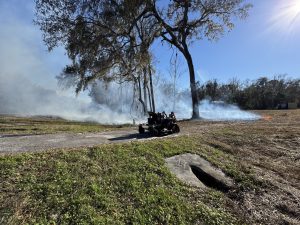
In addition to reducing fire risk, removing dead brush can promote healthier plant growth. Clearing out dead material allows sunlight and water to reach living vegetation more effectively. It can also reduce pest habitats and improve the overall appearance and usability of a property.
On a broader scale, when entire neighborhoods adopt brush management practices, the collective impact significantly lowers community-wide fire concerns. Fire prevention is most effective when approached as a shared responsibility.
Take action today
Wildfire mitigation does not always require complex technology or large infrastructure projects. Often, simple and consistent property maintenance makes a meaningful difference. Removing dead brush is a practical, cost-effective step that reduces available fuel, protects structures, and enhances overall safety.
If you have overgrown or brush-heavy areas on your property, professional assistance can make the process faster and more effective. CallPat at Bush Hog Gone Wild at 352-206-3453 today to discuss how we can help remove dead brush and reduce your fire hazard. Taking action now can help protect your property, your investment, and your community.